
Premieres on YouTube on Tuesday, December 1, 2026 at 16:00 UTC (11:00 a.m. U.S. Eastern, 1:00 p.m. in Brasília). The video player, chapters and full transcript are added to this page when the video goes live.
The case in brief
On the afternoon of Monday, February 4, 2019, Travis Kauffman, a 31-year-old environmental consultant, was trail running in the foothills west of Fort Collins, Colorado, near Horsetooth Mountain. By his own account, he heard pine needles rustle behind him, turned, and found a mountain lion about ten feet away.
He raised his arms and yelled, as wildlife guidance advises. The lion kept coming and lunged, and the two went off the trail into a gully. Kauffman later said he tried rotten sticks and a rock, and finally got his foot onto the lion's neck until it stopped moving. He estimated the fight lasted about ten minutes.
He ran about three miles down the mountain, met other people on the trail, and was driven to a hospital, where he received 28 stitches (the AP count; he itemized them in the CPW interview). Local news reports said he was released the next morning.
That evening, the Wildlife Health Lab of Colorado Parks and Wildlife (CPW) examined the animal. Its necropsy summary says the findings “supported the description of events given by the victim.” The lion was about four to five months old, hungry but not starving, and tested negative for rabies. The cause of death was “multifactorial including blunt trauma and strangulation.” A CPW spokesman later said the animal and its siblings were probably orphaned.
Key facts
- When and where: Monday afternoon, February 4, 2019, Horsetooth Mountain area, Larimer County, west of Fort Collins, Colorado.
- Who: Travis Kauffman, 31, environmental consultant and trail runner (AP, NPR).
- The animal: a young mountain lion, about 4–5 months old by tooth eruption (the report's header says 3–4 months), likely male because no female organs were found, estimated 35–40 lb before it was scavenged (CPW Wildlife Health Lab).
- Official finding: the necropsy “supported the description of events given by the victim”; the cause of death was “multifactorial including blunt trauma and strangulation”; the rabies test was negative (CPW).
- Outcome: Kauffman survived with 28 stitches (AP) and, according to local news reports, was released from the hospital the next morning. He said he would keep trail running, doing his longer remote runs with a friend.
- Context: Kauffman was the 22nd person attacked by a mountain lion in Colorado since 1990; three of those attacks were fatal (CPW, as reported by the AP in February 2019).
Frequently asked questions
What happened to the trail runner attacked by a mountain lion near Fort Collins, Colorado?
Travis Kauffman, 31, was running near Horsetooth Mountain on February 4, 2019 when a young mountain lion came up behind him, closed to about ten feet and lunged. By his own account he fought it for about ten minutes, got free, ran about three miles down the mountain and was driven to a hospital. He needed 28 stitches. Source: AP via The Salt Lake Tribune
Did the necropsy confirm Travis Kauffman's account?
Yes. The CPW Wildlife Health Lab summary says: “Necropsy findings supported the description of events given by the victim.” It found blunt trauma to the head and concluded that the cause of death was “multifactorial including blunt trauma and strangulation.” Rabies testing was negative. Source: CPW necropsy summary
How old was the mountain lion, and was it sick?
About four to five months old, judging by its teeth (the report's header says 3–4 months; its text says 4–5). It was likely male, because no female organs were found. The necropsy found no evidence of underlying disease in the tissues examined (most internal organs had been scavenged) and a negative rabies test. Limited fat reserves suggested the animal was hungry but not starving. Source: NBC News
Was the mountain lion an orphan?
CPW spokesman Jason Clay said the lion and its siblings were probably without their mother, who is typically the sole caretaker of the young: “we think these kittens were orphaned.” Cameras and traps set afterwards captured two young lions, which were sent to a wildlife rehabilitation center, with a plan to release them. Source: NBC News
How common are mountain lion attacks in Colorado?
Rare. When Kauffman was attacked in February 2019, he was the 22nd person attacked by a mountain lion in Colorado since 1990, and three of those attacks were fatal, according to CPW as reported by the AP. Source: AP via The Salt Lake Tribune
What should you do if you encounter a mountain lion?
The National Park Service says: do not run; stand and face the animal and make eye contact; do not crouch or bend over; do all you can to appear larger by raising your arms, opening your jacket and speaking firmly and loudly; throw stones or branches without crouching or turning your back; and fight back if attacked. Since a mountain lion usually tries to bite the head or neck, try to remain standing and face the attacking animal. This video is a true story, not survival instruction. Source: National Park Service, Mountain Lion Safety
What does Colorado Parks and Wildlife advise for hikers and runners?
Walk or hike in groups and make noise so you do not surprise a lion; give the lion an escape route; speak calmly, move slowly and avoid running; raise your arms and open your jacket to look larger; if it behaves aggressively, throw objects, wave your arms and speak firmly, and if it does not leave, face it and back away slowly. If attacked, fight back: people have defended themselves with rocks, sticks, caps or jackets, garden tools and their bare hands. Source: Colorado Parks and Wildlife, Living with Mountain Lions
Are the images in the video real?
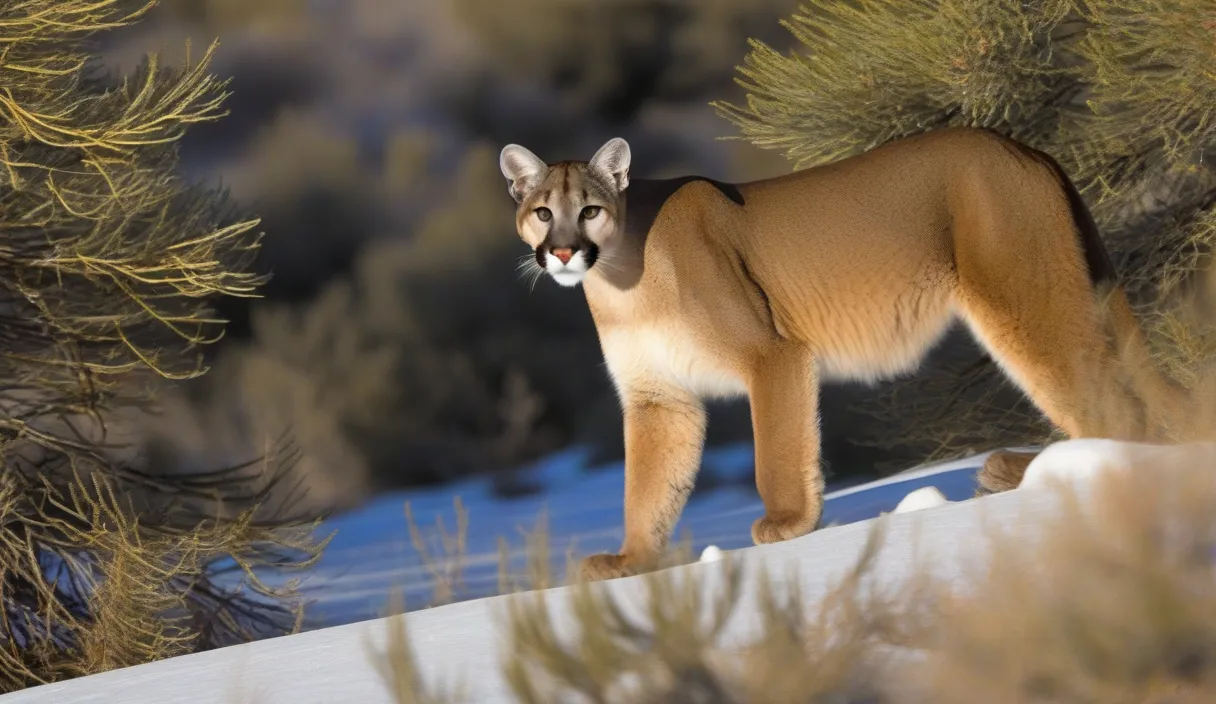
No attack footage and no injury images are used. Maps, silhouettes and timeline graphics are animated reconstructions, wildlife footage is illustrative and does not show the animal in this case, and the narration voice is synthetic (AI). Quotes come from the public record and are attributed.
Sources
- Colorado Parks and Wildlife — interview with Travis Kauffman (video)
- CPW Wildlife Health Lab — Necropsy Summary, WHL 19-93 (PDF)
- Associated Press via The Salt Lake Tribune, Feb. 15, 2019
- NPR via NPR Illinois, Feb. 15, 2019
- NBC News, Mar. 1, 2019
- Denver7, Feb. 2019
- National Park Service — Mountain Lion Safety
- Colorado Parks and Wildlife — Living with Mountain Lions
Channel rule: every claim traces to a named, public document. How we choose sources.